

After writing about the hidden connections between rabbits, foxes, butterflies, and plants, I stumbled upon another mystery in my own garden.
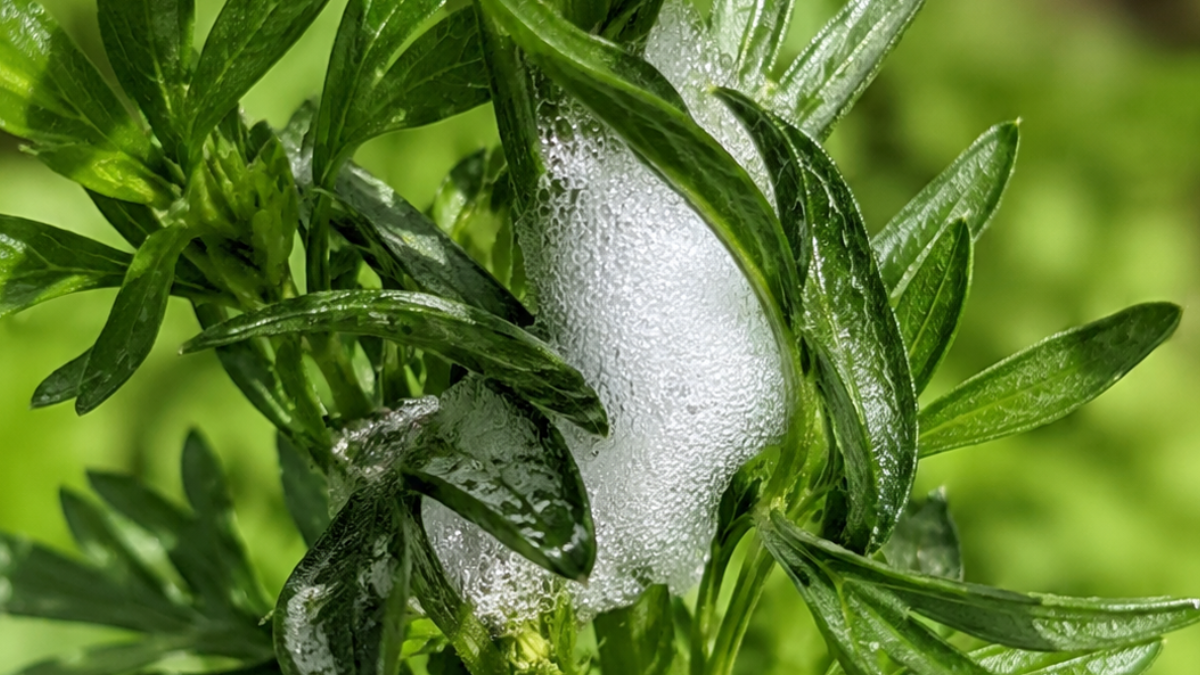
While inspecting my parsley plants, I noticed patches of white foam attached to the stems. At first glance, it looked as though someone had sprayed soap on the plant. The foam appeared in several locations and on more than one plant.
Naturally, I became curious.
What was creating this strange foam, and why?
.
A Closer Look
As I examined the foam more carefully, I discovered tiny green insects hidden inside. My first thought was that they might be aphids. However, the more I observed them, the less certain I became.
The insects moved surprisingly quickly when disturbed, and they were consistently found inside the foam. Further investigation led me to a likely explanation: these were probably spittlebug nymphs, also known as froghopper nymphs.
Unlike aphids, these insects create the foam themselves.

.
A Self-Built Shelter
Spittlebug nymphs feed on plant sap. As they feed, they produce a frothy foam that surrounds their bodies.
At first glance, the foam appears to be a simple hiding place. However, researchers have discovered that it serves several important functions.
The foam helps:
- Prevent the nymph from drying out.
- Maintain a humid environment.
- Protect the insect from temperature extremes.
- Reduce exposure to sunlight and ultraviolet radiation.
- Conceal the nymph from many predators.
What appears to be a simple patch of foam is actually a carefully engineered shelter.
The nymph remains hidden inside while continuing to feed on the plant.
.
An Unexpected Connection
At first, the story seemed simple:
Plant → Spittlebug Nymph
But a closer look revealed something much more complex.
While researching spittlebugs, I came across a fascinating study describing unexpected interactions between spittlebugs, ants, and aphids.
One of the most surprising discoveries was that spittlebug foam served a purpose beyond protecting the nymph that produced it. Researchers found that prairie ants used the foam as a natural adhesive when constructing nests and protective tents around aphid colonies. In other words, a material produced by one insect became a useful construction resource for another.
Even more surprisingly, the study reported observing greater numbers of spittlebug nymphs near ant nests than in areas farther away.
In other words, the foam produced by one insect was becoming part of a much larger ecological network involving several different species.
The story became even more fascinating when I learned that the foam does not always protect the nymph from ants. The researchers observed prairie ants placed soil and plant debris onto the foam, allowing them to access to the soft-bodied insect hidden inside.
What first appeared to be a simple patch of foam was turning into a network of interactions involving plants, spittlebugs, ants, and aphids.
.
Hidden Information in Nature
One of the most fascinating aspects of ecology is that organisms are constantly gathering information from their environment.
In a previous article, we saw how butterflies use chemical cues to identify suitable host plants for their eggs.
We also explored how rabbits and foxes respond to information about food availability and potential danger.
The spittlebug story reveals another example of how organisms interact in ways that often go unnoticed.
The nymph uses the plant as a food source. Ants use materials from their environment to build nests and shelters. Predators and other insects search for food and opportunities. Each organism is responding to information and resources available around it.
What appears to be a simple patch of foam on a parsley stem is actually part of a much larger web of interactions.
.
More Than Meets the Eye
What began as a curious white foam on a garden plant turned into a reminder of how much activity takes place unnoticed around us.
A plant feeding an insect.
An insect building a protective shelter.
Ants using that shelter’s material in their own construction projects.
A network of organisms connected in ways that are easy to overlook.
As I continued reading about spittlebugs, I discovered another surprising story involving ants and aphids. Beside building protective shelters around aphid colonies, some ant species defend aphids from predators and even help maintain the colonies over time.. What began as a mystery foam on a parsley stem from my garden had opened the door to another hidden relationship in nature.
Why would ants invest so much effort in protecting what many gardeners consider a pest?
That question deserves a closer look of its own.
.
References and Further Reading
- Wilson, E.O. & Wheeler, G.C. (1997). The Origins of Prairie Ant Tents and Other Spittlebug-Ant Associations. Psyche.
- Marshall, S. (2024). Spit Happens: The Hidden Life of Spittlebugs. Farm and Dairy.
- University of Wisconsin Horticulture. Spittlebugs.